The Groom’s Own Ledger: A Measured Men’s Wedding Jewellery Plan for 2026
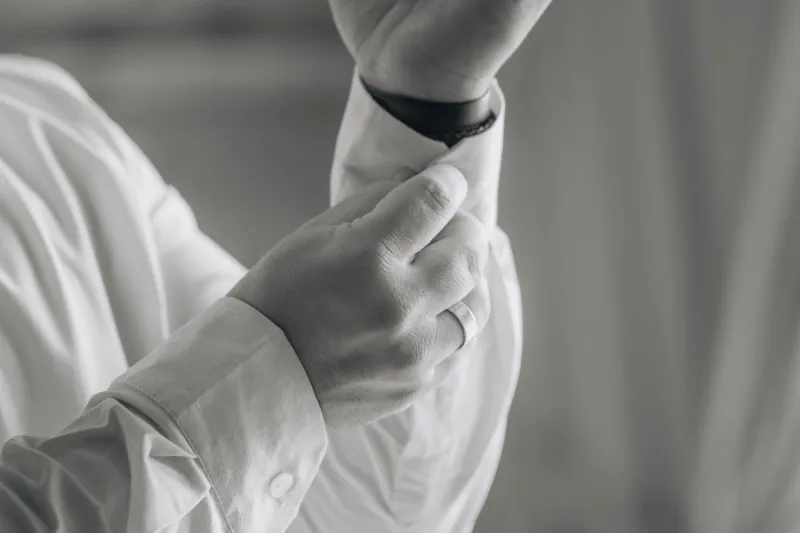
Wedding-season advice tends to assume that the jewellery decisions belong to the bride. The groom, by contrast, is often left with a borrowed pair of cufflinks, a band selected in a hurry and a watch that happens to be on his wrist. That is not a failure of taste so much as a failure of planning. A groom’s jewellery does not need to be elaborate, but it should be deliberate. The aim is a small, cohesive set of pieces that look right in the photographs, feel comfortable during a long day and, most importantly, continue to earn their place long after the speeches.
Begin with the band, not the accessories
The wedding band is the anchor. It is the one piece from the day that will be worn continuously, so it deserves the earliest and most careful consideration. In the UK, the choice usually begins with metal: platinum, palladium, white gold, yellow gold or rose gold. Each has a different character and practical behaviour. Platinum is dense and quietly substantial; palladium is lighter and remains naturally white; white gold is often rhodium-plated and may need re-plating over time; yellow and rose gold bring warmth and a more traditional appearance.
Proportion matters as much as metal. A very narrow band can look lost on a larger hand, while an overly wide band can feel cumbersome and distract from the hand itself. Comfort-fit interiors are worth asking about, particularly for anyone unused to wearing a ring daily. Engraving should be decided calmly rather than on the final visit: initials, a date or a short phrase can be meaningful, but the space inside a band is limited and the lettering should remain legible. A UK hallmark is also a useful assurance of metal quality and should be visible and explained at purchase.
Put the hardware in the same key
Cufflinks, a tie pin or a discreet lapel detail are supporting players. They should relate to the band and watch without becoming a matching set in the literal sense. A groom in a lounge suit might choose simple silver or white-metal cufflinks with a clean shape; someone in black tie may need dress studs as well, and those should be chosen with the same restraint. Novelty cufflinks can be charming in private, but they rarely improve a formal photograph.
Metal harmony is a practical guide rather than a strict rule. If the wedding band is platinum or white gold, white-metal cufflinks will look natural; if the band is yellow gold, a warm-toned cufflink or a mixed-metal design can prevent the outfit from feeling disjointed. The watch should be considered in the same conversation. A tie pin, if used, should sit neatly and unobtrusively; it is there to hold fabric, not to become a second brooch. A lapel detail should be small enough to be noticed only at close range.
Let the watch be present, not protagonist
Many grooms already own a fine watch, and the wedding day is not necessarily the moment to buy another. A slim dress watch on a leather strap is a natural companion to formal tailoring, while a metal bracelet can work well with a lounge suit if the proportions are restrained. A sports watch or a smartwatch may be perfectly appropriate to the groom’s daily life, but it can look out of place against morning dress or black tie. If a watch is borrowed or newly purchased, wear it for a full day beforehand to check the strap, clasp and comfort.
Think in proportion and restraint
Men’s wedding jewellery works best when it is considered as a whole rather than as a series of separate purchases. The width of the band should suit the hand; the size of the cufflinks should suit the shirt and the wearer’s build; the watch should suit the formality of the outfit. Too many reflective surfaces near the face and wrists compete for attention. The goal is a quiet coherence: one or two points of interest, supported by good materials and neat finishing.
It is also worth remembering that UK wedding formality varies considerably. A city ceremony in a lounge suit calls for different choices from a country wedding in morning dress or an evening reception in black tie. The groom’s jewellery should answer to the dress code rather than to a generic idea of wedding style.
Rehearse the kit, then record it
Before the day, put the full outfit together at home: shirt, tie or cravat, jacket, cufflinks, watch and band. Check that the cufflinks fasten easily, that the tie pin sits at the right height and that the ring feels secure but not tight. Photographs taken in daylight will reveal whether the metals sit well together. Keep receipts, valuation paperwork and any guarantee information in one place; if a piece is substantial, insurance should be arranged before the wedding rather than after.
After the day, the same discipline pays dividends. The band becomes everyday wear; the cufflinks return for occasions that warrant them; the watch continues its own rotation. A groom’s jewellery kit should not be a costume. Chosen with care, it becomes a small personal collection — formal enough for the occasion, restrained enough for the years that follow.