What the Drawer Remembers: Building a Family Record for Inherited Jewellery and Watches
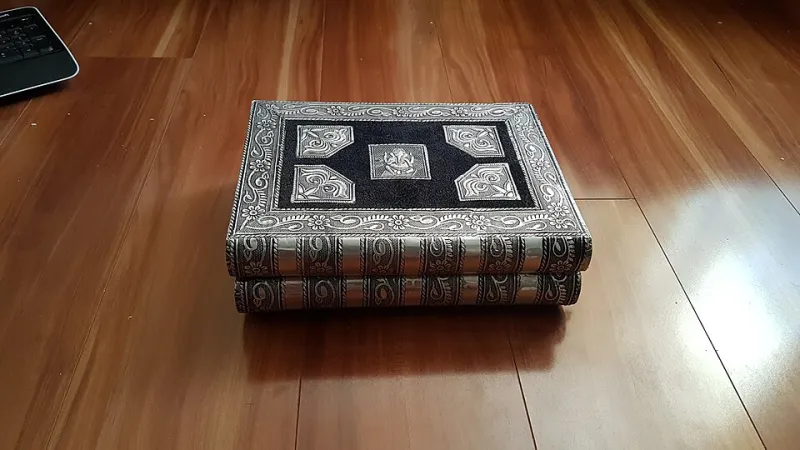
Photo: U3211603, CC BY-SA 4.0, via Wikimedia Commons
There is a particular moment, familiar to many British families, when a small box is placed on a kitchen table and opened. Inside is a ring, a brooch, a watch with a stretch of worn leather strap. Someone says, "This was your great-aunt's," and then, quite often, the sentence simply stops. The object is now yours. The story, or most of it, is not.
This is not a failure of sentiment. Memory is uneven, and the people who could have filled the gaps are frequently the people whose absence occasioned the conversation in the first place. What follows is a practical approach to closing those gaps while there is still someone to ask — a record built for stewardship rather than valuation, though it will serve that purpose too.
Begin Before the Box Is Emptied
The instinct, on receiving an inherited piece, is to have it cleaned, valued and put away. Resist the first two for a fortnight. A gentle clean can remove the very evidence — a maker's mark softened by wear, a repair solder, a strand of hair caught behind a setting — that makes an object legible. More importantly, the first weeks are when relatives are most willing to talk, and least willing to be asked twice.
Choose a comfortable setting and a modest method. A notebook and a phone with a voice recorder will do. Ask permission before recording; some older relatives find the idea of a microphone intrusive, and a written note taken afterwards is perfectly adequate. The aim is not a documentary. It is a page or two per piece, written in ordinary language.
The Questions That Actually Yield Something
Broad enquiries — "Tell me about Grandma's jewellery" — tend to produce broad answers. Specific ones work better. Consider asking, in roughly this order:
- Who wore this, and on what occasions? A wedding, a christening, a Tuesday. Ordinary use is as revealing as ceremony.
- Where did it come from? A gift, an inheritance in its own right, a purchase abroad, a jeweller on a particular high street.
- Was it altered? Resized, restrung, re-set, a new crystal fitted. Alterations are the most commonly forgotten and most useful facts.
- Did anyone else want it? The answer often explains why a piece sits in your hands rather than a cousin's.
- What was it kept in? The box, the pouch, the drawer, the biscuit tin. Storage history explains condition.
Record the answers as spoken, including contradictions. A family that disagrees about whether a brooch came from Dublin or Birmingham has told you something worth noting: the uncertainty itself is part of the record.
Reading the Object Without a Loupe
The piece will often answer questions the family cannot. British hallmarks are the most reliable witnesses available, and they are worth photographing even before you understand them.
A full UK hallmark carries four elements: the sponsor's or maker's mark, the assay office symbol, the fineness mark and, for most pieces made since 1975, a date letter. The assay office symbol tells you where the piece was tested — the anchor for Birmingham, the leopard's head for London, the rose for Sheffield, the castle for Edinburgh. The date letter, read against the relevant office's tables, can place manufacture within a year. Gold and silver are struck differently, and platinum has its own conventions, so a jeweller's opinion is worth a few minutes of anyone's afternoon.
Watches offer a parallel trail. Case-back engravings, serial numbers between the lugs, the style of the dial furniture and the signature on the movement all point towards a decade, and sometimes a year. Photograph these before any servicing, because a watchmaker's marks added later sit alongside the originals and can confuse the reading.
Where nothing is marked — and much older or foreign-made jewellery is not — write down that fact plainly. An honest blank is more useful to a future appraiser than a confident guess.
Photographing for the Record, Not for Instagram
A useful photographic record takes perhaps twenty minutes per piece and follows a fixed sequence: the whole object on a plain mid-grey background, in daylight but out of direct sun; a close view of every hallmark and stamp; the reverse and the clasp; any damage, however minor; and the object in its box if a box survives.
Place a ruler or a coin in the frame of one shot for scale, and note the date of photography. Keep the files named consistently — the surname plus a short descriptor plus the year. Print a small set. Digital files are convenient; a printed sheet in the box is what a family will actually find.
A Record That Lives Beside the Piece
Store the written account, the printed photographs and any transcript with the jewellery itself, in an archival envelope rather than loose in the box where it will abrade the piece. Keep a duplicate at home elsewhere — with the household documents, or scanned and held in a family cloud folder.
Two practical cautions. First, avoid stating a value in this document. Values belong in an insurance schedule, which is revised and replaced; a provenance record should be durable and value-free, so that it does not become misleading after five years of gold prices. Second, be discreet about security. Do not list a full inventory of what is in the house in a document that travels with the jewellery to a repairer.
Where Valuation Fits, and Where It Does Not
Nothing in the above replaces a professional appraisal. It makes one easier. An appraiser who is handed a note explaining that the brooch was re-set in 1968 by a named jeweller, and that the central stone was replaced at that time, can work faster and more accurately than one confronted by an unaccompanied object.
But the record is not an appraisal, and it should be permitted to be something less clinical. A sentence noting that the wearer wore the ring on her right hand because the left was swollen in later life is not data. It is the reason the object survived at all. Both kinds of note belong in the file, and the second is the one that will be read aloud.
Stewardship, Not Administration
The word archive sounds forbidding. What is being proposed here is lighter: an afternoon of conversation, a handful of photographs, a page of writing per piece. Done in 2026, it will spare someone in 2046 a great deal of guesswork — and it will give the objects in the drawer a history that can be handed on rather than reconstructed.
Begin with the piece about which least is known. The gaps tend to be where the stories are.