The Inherited Piece, Reconsidered: Restyling Heirlooms for Contemporary Life
An inheritance is rarely just an object. A ring, necklace or watch arrives with a story, a set of expectations and, often, a practical problem: it may not fit, suit or survive the life its new owner leads. The answer is not always to lock it away, nor to remodel it beyond recognition. A measured heirloom audit can establish what the piece is, what it means and whether a sympathetic restoration or redesign would allow it to be worn again. In 2026, with recycled metals and stone reuse more widely discussed, there is also a strong ethical case for keeping inherited materials in circulation rather than replacing them.
Begin with documentation, not desire
Before considering a new setting, gather what already exists. Look for valuations, receipts, insurance schedules, original boxes and watch papers. Ask relatives about the piece's history: was it bought for a particular occasion, altered previously, or worn daily? Photograph it from several angles, including the back of the mount, the inside of the shank and any maker's marks.
In the UK, hallmarks are a useful starting point. They can indicate metal purity and, through assay office marks, a place of assay. They do not replace a professional assessment, but they help establish whether a piece is solid gold, platinum, silver or plated. For watches, note the reference and serial numbers, and ask whether the original bracelet, crown or box survives. Do not polish or clean the piece before an appraisal; even well-meant cleaning can remove evidence or disturb fragile settings.
Assess metal, stones and condition
A jeweller with gemmological training should examine the piece under magnification. The metal matters: 9ct and 18ct gold, platinum and silver behave differently in wear and repair, and a previous repair may have used a different alloy. Ask about nickel sensitivity if the piece is to be worn against the skin. For stones, the key questions are identity, treatment, hardness and condition. Emeralds, opals and pearls require a different approach from diamonds or sapphires; a stone that is fragile for daily wear may be better suited to occasional use or a protective bezel setting.
Condition is equally important. Worn claws, a thinning shank, stretched pearl silk or a loose hinge are maintenance issues, not necessarily reasons for a complete redesign. With watches, ask for a movement assessment and service history. Original parts can add value, so avoid unnecessary polishing or replacement before you understand what you have.
Sentimental value versus wearability
Sentiment and practicality are not opposites, but they need to be separated long enough to make a clear decision. Ask yourself whether you would wear the piece as it is for a week. If the answer is no, identify why: size, style, colour, fragility or simply the association it carries. A piece can be deeply meaningful and still be wrong for daily life.
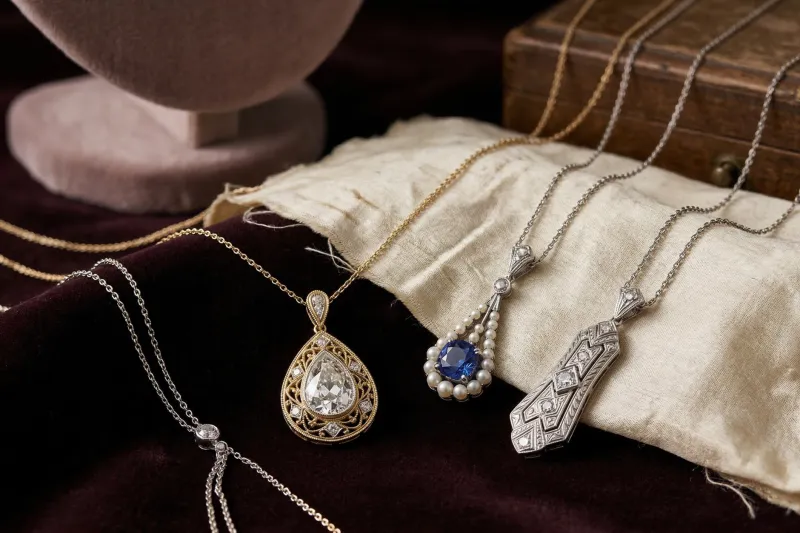
It is also acceptable to keep an inherited item intact and unworn. Not every heirloom needs to be remodelled. If you do want to wear it, consider a partial reuse: one stone set into a pendant, a pair of earrings made from matched diamonds, or a signet ring reshaped for a different finger. The aim is to preserve the memory while removing the obstacle to wear.
Restoration, resetting or respectful reimagining
There are three broad routes. Restoration is the most conservative: re-tipping claws, replacing a worn shank, restringing pearls or servicing a watch. Resetting uses the existing stones in a new mount while leaving the original setting intact where possible. Reimagining combines stones or metal from one or more pieces into a new design.
A sympathetic redesign should respect proportion, stone condition and the original character of the piece. If the mount is signed, historically interesting or especially well made, consider keeping it and making a separate contemporary piece. For watches, restoration should not mean over-polishing; patina and original details are part of the object's integrity. Ask to see drawings, CAD images or a wax model before work begins, and keep any removed metal or original components unless you explicitly agree otherwise.
An international perspective on craftsmanship and ethical stone reuse
Craft traditions vary in ways that can inform a redesign. Italian hand engraving, French micro-pavé, Scandinavian minimal bezels and Indian stone-setting traditions each offer different approaches to the same problem: how to hold a stone securely and beautifully. The right choice is the technique that serves the stone and the wearer, not the one that happens to be fashionable.
Ethical stone reuse is a particular strength of heirloom work. Inherited stones have a known history, which is increasingly valuable to buyers who care about provenance. Recycled gold and platinum are now widely available, and many workshops will reuse the customer's own metal. If work is carried out abroad, discuss assay and hallmarking clearly; for personal commissions, the emphasis should be on written specifications, guarantees and traceability rather than vague assurances.
Questions to ask before work begins
Before instructing any jeweller, ask for a written specification and quotation. Clarify who will carry out the work and whether a gemmologist has assessed the stones. Ask whether you will see a CAD image or wax model, what the expected timeline is, and what will happen to any metal removed during alteration. Confirm how the stones will be secured, what guarantee applies, and whether the piece is insured while in the workshop. Ask whether it will be hallmarked after alteration and whether a revised valuation can be provided for insurance. Finally, request before-and-after photographs and a detailed invoice describing the work.
Insurance and the paper trail
Once the work is complete, update your insurance records. A revised valuation should reflect the piece as it now exists, not as it was before alteration. Keep the original paperwork, photographs and any workshop receipts. For watches, retain service records and avoid disposing of original parts without consideration. If the piece is worn rarely, a safe or bank deposit box may be appropriate, but check whether your insurer requires specific storage conditions.
The heirloom audit is not an act of disrespect to the past. It is a way of deciding what deserves to be preserved, what can be adapted and what should simply be insured and kept safe. Handled with care, an inherited piece can move from the back of a drawer to a place in contemporary life without losing the story that made it worth keeping.