The Weight of a Link: Choosing a Gold Chain That Earns Its Place
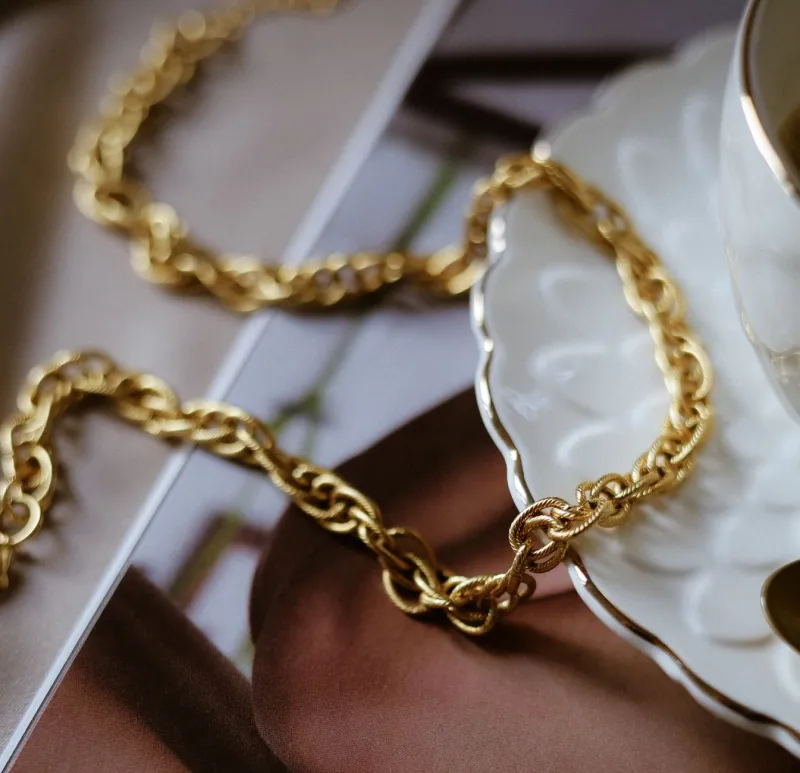
A gold chain can appear to be the simplest purchase in the jeweller’s window. There is no setting to inspect, no stone to grade and no complicated certificate to interpret. Yet a chain is a piece of engineering worn close to the skin, often daily, and the differences between one that survives a decade of wear and one that spends its life in a drawer are rarely visible at a glance. For 2026, the sensible approach is to look past the shine and consider three practical measures: gram weight, weave and gauge, followed by the clasp that holds the whole arrangement together.
Grams Are Not the Whole Story
Weight is usually the first number a shopper notices, and with good reason. Gold is priced by weight, and a heavier chain contains more metal. But gram weight alone does not tell you how a chain will behave. A five-gram cable chain and a five-gram rope chain can feel quite different against the neck, because the metal has been drawn, twisted and assembled in different ways.
As a broad guide, chains under three grams tend to be delicate and best suited to occasional wear or very small pendants. Pieces between four and eight grams often make the most versatile everyday chains for UK shoppers, offering enough presence without dragging at the collarbone. Above ten grams, a chain becomes a statement in its own right and should be chosen with the same care as a piece of sculpture: balance matters as much as weight.
It is also worth asking whether a chain is solid or hollow. Hollow links can deliver visual impact at a lower gram weight, but they are more vulnerable to dents and are harder to repair invisibly. A solid chain may cost more upfront, yet it often represents the calmer long-term purchase.
A Short Vocabulary of Weave
The word weave describes how the links are formed and joined. Each style has a character, and none is universally superior.
Cable chains use oval links that interlock in a simple, alternating pattern. They are traditional, robust and easy to repair. A cable chain holds a pendant securely and resists tangling reasonably well, which makes it a sound first choice for a piece intended for daily wear.
Curb chains are made from flattened links that lie close to the skin. A tight curb feels smooth and restrained; a more open curb catches the light and has greater visual movement. Curb chains are excellent for layering because they sit flat and are less inclined to twist around neighbouring chains.
Trace chains are fine, uniform and discreet. They are often used for small pendants and delicate layering, but their slim proportions mean they should be treated with some care. A trace chain is not the best candidate for a heavy pendant or for rough everyday use.
Rope chains are formed by twisting links so that the chain resembles a braided cord. They have a lively, reflective surface and a pleasing weight for their diameter. A rope chain can, however, roll and kink if worn with other chains, so it is often better as a standalone piece or as the anchor of a carefully spaced layer.
Box chains use square links that create a sleek, almost architectural line. They are strong for their weight and sit neatly against the neck. A box chain is a good partner for pendants, though its stiffness means it should be tried on rather than judged by photograph alone.
Gauge, Comfort and the Question of Everyday
Gauge refers to the thickness of the wire used to make each link. A thicker gauge generally means greater strength, but it also changes how the chain feels. Very fine chains can catch on hair and clothing; very thick chains can feel heavy on the collarbone by the end of a long day.
Comfort is deeply personal. A chain that sits well on a cool winter morning may feel different under a coat collar or against a jumper. In the UK climate, where layers are part of daily dress, a chain that lies flat and does not catch on knitwear is often the more practical choice. Neck size matters too: a sixteen-inch chain sits at the base of the neck, an eighteen-inch chain falls lower, and a twenty-inch chain creates a more relaxed line. If a chain is intended for everyday wear, check the fastening and any extension links before committing.
Clasps: The Component That Decides
The clasp is the smallest part of the chain and the one most likely to fail first. A spring ring is traditional and neat, but it can weaken over time. A lobster clasp is secure and easy to operate, though it should be checked for smooth action. A box clasp with a safety catch is a strong option for heavier chains. Magnetic clasps may be convenient, but they are not appropriate for valuable fine jewellery unless used as a secondary safety feature.
A well-made clasp should feel positive in the hand, without sharp edges or a loose hinge. It is also worth asking whether the clasp can be replaced by a jeweller without disturbing the chain’s proportions. Repairability is part of value.
Buying for a Pendant, Buying for Layers
For a pendant, the chain should serve the piece rather than compete with it. Check that the bail fits comfortably over the clasp and that the chain’s gauge can support the pendant’s weight without stretching. A cable or box chain is often the most dependable partner for a pendant, while a trace chain suits a small, light design.
For layering, contrast is useful but harmony is essential. Choose lengths that separate naturally, such as sixteen, eighteen and twenty inches, and consider weaves that lie flat rather than roll. Curb and box chains layer well together; a rope chain may be better left as the focal point. Keep metal colour consistent unless the mix is deliberate, and fasten each chain independently so that one failure does not take the whole arrangement with it.
Value, Hallmark and the Long View
In 2026, gold remains a considered purchase, and the price of the metal is only one part of the cost. Making charges, clasp quality and the reputation of the retailer all contribute. A chain should carry the appropriate UK hallmark, which confirms its precious metal content and gives the buyer a point of reference. For shoppers buying internationally, it is worth understanding the standards used in the country of purchase and whether the piece will be accepted for repair or resale at home.
Solid construction, a sensible gauge and a secure clasp are the quiet indicators of value. They are not as immediately appealing as a bright finish, but they are what allow a chain to be worn without anxiety.
A Final Measure
A gold chain earns its place through daily performance: it sits comfortably, holds its pendant, layers without complaint and fastens with reassurance. Before buying, try the chain on with the neckline you wear most often, check how it falls when you move, and ask about repair and resizing. The right chain is not necessarily the heaviest or the most ornate. It is the one whose weight, weave and clasp work together so naturally that you forget you are wearing it.