When the Sky Is the Judge: Assessing Diamonds and Gemstones in British Winter Light
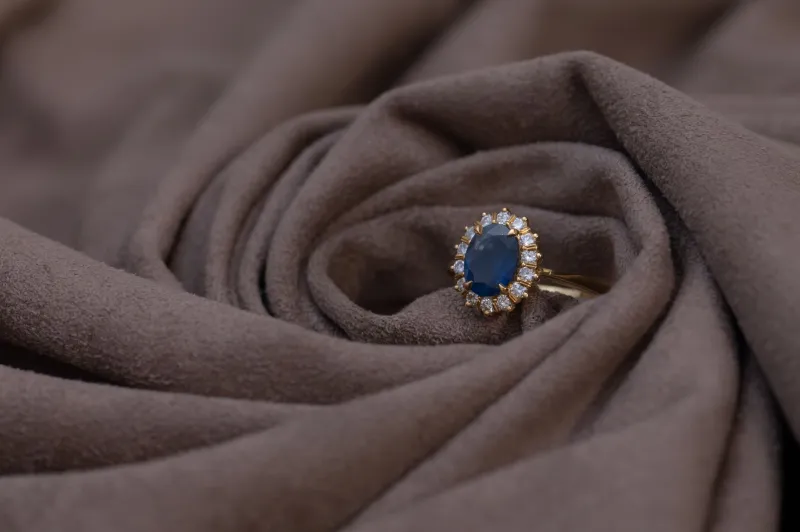
Fine jewellery is often bought in rooms engineered for optimism. The spotlights are bright, the background is clean, and the stone has been placed at the angle where it performs best. None of this is dishonest; it is retail. But it is not the conditions in which jewellery is worn. A ring is worn at a kitchen table, on a train, in a meeting room, under a grey November sky. The considerate buyer therefore needs a second opinion — not another salesperson's, but the sky's.
Why the Counter Light Flatters
Showroom lighting tends to be strong, directional and warm. It exaggerates contrast, sharpens facets and makes even modest stones look lively. Diamonds in particular are designed to return light, and a well-positioned lamp will find every available sparkle. Coloured gemstones are no less responsive: a sapphire can look deeper, a ruby warmer, an emerald more saturated under a beam aimed precisely at the table. The effect is real, but it is temporary.
This is not a reason to distrust the jeweller. It is a reason to ask for a different view. A reputable counter will have a window, a daylight lamp or a quiet corner where the stone can be seen without theatrical help. If it does not, that is useful information in itself.
What Grey Daylight Reveals
British winter daylight is diffuse, cool and unsentimental. An overcast sky acts as a large softbox: it removes the hard highlights that flatter facets and shows the stone's body colour more plainly. For diamonds, this can be sobering. A stone that looked colourless under a warm lamp may show a faint tint at the window. A gemstone that seemed vividly saturated may settle into a quieter hue. Neither discovery is a disaster; it is simply the truth of the stone in ordinary conditions.
Grey daylight is especially useful for judging clarity. Inclusions that disappear under directional light can become visible when the light is even. This matters more for some stones than others. An emerald with a natural garden of inclusions may look characterful in daylight and muddy under a spotlight; a diamond with a feather near the edge may be invisible in one setting and obvious in another. The window does not exaggerate, but it does not conceal.
It also reveals the quality of the cut. A well-cut diamond should still show life in flat light. The sparkle may be less theatrical, but the stone should not go dead. If it requires a spotlight to be beautiful, it will spend much of its life waiting for one.
A Three-Light Method
The most practical approach is to judge the stone in three conditions, in this order.
At the Window
Ask to take the piece to a window — ideally one facing north, away from direct sun. Place it on white paper or against clean skin, not on a coloured cloth. Look at it from arm's length first, then closer. Rotate it slowly. Notice the body colour, the sharpness of the facets and any inclusions that appear. Compare two stones side by side if possible; the eye is better at difference than at absolutes.
Out of Doors
Step outside, even briefly. British winter light changes quickly, and a bright January morning is cooler and more revealing than a damp November afternoon. Avoid direct sunlight if you can; it flatters almost everything and tells you little. Look at the stone under the sky, then against a coat sleeve or a gloved hand. This is closer to the life the piece will actually lead.
After Dark
Finally, view the stone under ordinary evening lighting. Warm domestic lamps, candlelight and restaurant lighting will make most stones look richer and warmer. That is not a fault, but it is a different reading. If a diamond loses all its crispness under a low lamp, or a sapphire turns almost black, you should know before you buy. The evening test is about temperament as much as beauty.
Reading Colour, Brilliance and Clarity
Colour is the quality most changed by light. Diamonds are graded in controlled conditions, but your eye will see the stone against your skin, your clothes and the room. A faint tint that is invisible in a white-paper comparison may be more noticeable against a dark sleeve; a warm-toned stone may look perfectly white next to yellow gold. There is no single correct setting, only the one in which you will wear it.
Brilliance is not the same as sparkle. Sparkle is the flash of light from the surface; brilliance is the return of light from within. Grey daylight is good at separating the two. A stone with strong brilliance will look bright even when the light is flat. A stone that relies on surface flash may look dull once the lamp is gone.
Clarity is best judged with patience. Look for inclusions at the window, then again outdoors, then under the evening lamp. Ask yourself whether they bother you in ordinary viewing, not whether they exist. Most stones have some evidence of their natural origin; the question is whether it interrupts the stone's beauty or simply confirms its character.
Buying With Confidence in 2026
A grading report is a useful anchor, but it is not a substitute for your own eyes. Reports describe a stone under laboratory conditions; they cannot tell you how it will look on a grey Tuesday in Manchester or under the warm lamps of a London dining room. Use the report to understand the stone's specifications, then use daylight to understand the stone itself.
In 2026, it is reasonable to ask for a daylight viewing before committing. A confident jeweller will accommodate it. If you are buying online, check the returns policy in writing and make use of it: view the piece at home, at a window, and in the evening before the return window closes. For distance sales in the UK, consumer protection gives you a period to change your mind, but the practical test is still yours to perform.
Finally, resist the pressure to decide in the showroom. The right stone will survive the journey from spotlight to sky. The wrong one may glitter impressively under the lamp and then quietly disappoint at the window. The grey sky is not an enemy of fine jewellery; it is one of the fairest critics a buyer can have.