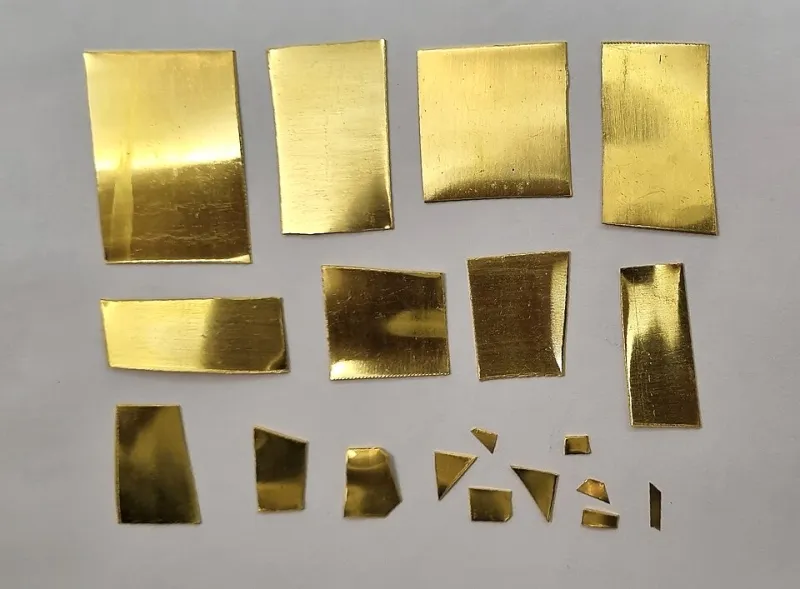
Carat, Context and Cost: A Measured Case for 9ct Gold in British Jewellery Boxes

Few questions divide British jewellery shoppers quite like the matter of carat. A ring marked 9ct may be perfectly ordinary on a UK high street, yet appear curiously light in a Parisian atelier or a Hong Kong goldsmith's window. The debate is not merely technical. It touches on taste, budget, wearing habits and the quiet expectations we place on the pieces we keep. In 2026, with gold prices persisting at elevated levels and shoppers increasingly deliberate about what they add to their collections, the case for 9ct gold deserves a fair hearing rather than a reflex dismissal.
What the Numbers Actually Mean
Carat denotes purity by weight. Nine-carat gold contains 37.5 per cent fine gold; 14ct contains 58.5 per cent; 18ct contains 75 per cent; and 22ct contains 91.6 per cent. The remainder is made up of alloying metals, which determine colour, hardness and working characteristics. In the UK, any item described as gold must be hallmarked if it exceeds the statutory weight thresholds, and the assay office mark provides an independent verification of fineness. This is a meaningful consumer protection, and it applies equally to 9ct and 22ct pieces.
The practical consequence is that 9ct gold is not a diluted imitation. It is a legitimate alloy with its own properties, widely manufactured, repaired and sold in Britain. The more useful question is not whether it is real, but whether its particular balance of qualities suits the wearer and the occasion.
Durability and the Demands of Daily Wear
Lower-carat gold is generally harder than its richer counterparts because the alloy content is higher. That can be an advantage in pieces subjected to knocks, such as everyday rings, bracelets and children's jewellery. An 18ct band is unmistakably richer in colour, but it is also softer and more prone to scratching; a 22ct piece, while beautiful and culturally significant, is softer still and best suited to ceremonial or occasional wear.
For a UK audience accustomed to layering necklaces, wearing rings through commutes and removing gloves in winter, 9ct offers a sensible resilience. It is not indestructible, and thin settings can still deform, but it holds up well to the ordinary abrasions of daily life. Those seeking a piece for occasional evening wear may find the trade-off less compelling, since softness matters less when a jewel is worn infrequently.
Colour, Finish and the Question of Taste
Colour is where personal preference becomes decisive. Nine-carat yellow gold often appears paler than 18ct or 22ct, though the exact hue depends on the alloying recipe used by the manufacturer. Some 9ct pieces are deliberately formulated to achieve a warm, buttery tone; others lean towards a cooler yellow. White gold is rhodium-plated for brightness regardless of carat, but the underlying alloy can influence how often re-plating is required. Rose gold derives its blush from copper, and the intensity varies across carats.
In the UK, 9ct has long been accepted as a mainstream choice for everyday jewellery. In parts of southern Europe, 18ct is the conventional standard and 9ct can seem unusually light. In parts of Asia, 22ct and 24ct gold carry cultural and investment weight, particularly for bridal and celebratory pieces. Neither hierarchy is objectively superior; each reflects local history, price sensitivity and customary expectations. A UK shopper choosing 9ct is participating in a long domestic tradition, not settling for a lesser product.
Budget, Repairs and the Long View
The financial argument for 9ct is straightforward: less fine gold means a lower price for a comparable design. That can make it easier to own several pieces, or to choose a more elaborate setting without stretching the budget. It also makes replacement and resizing less painful when circumstances change.
Repair practicalities matter more than many shoppers anticipate. Most UK jewellers are equipped to size, re-tip and restore 9ct pieces, and the alloy is widely stocked. Very high-carat pieces may require more specialist handling because of their softness. White gold requires periodic rhodium plating regardless of carat, and stone settings should be checked annually in any case.
Resale expectations should be kept realistic. A 9ct piece will not behave like a bullion investment; its scrap value is modest, and its second-hand market is driven largely by design and brand rather than metal content. An 18ct piece recovers a higher proportion of its metal value, and a 22ct piece sits closer to the bullion market, but none of these should be purchased as a financial instrument. Jewellery is worn first and valued second.
Where 9ct Fits in a Considered Wardrobe
The most defensible role for 9ct gold is in pieces that will be worn often and subjected to real life: a signature ring, a chain worn daily, a bracelet that accompanies a watch. Here, its hardness and affordability are genuine virtues. For milestone pieces intended to be passed down, 18ct or platinum may offer a more enduring sense of substance, provided the wearer accepts the softer surface. For cultural or ceremonial pieces where high carat is expected, 22ct remains the appropriate choice.
The prudent approach is to buy the carat that suits the job rather than the carat that sounds most impressive. Check the hallmark, ask about the alloy and rhodium finish, confirm the repair policy and consider how the piece will be worn. In 2026, a well-made 9ct jewel, chosen with care, can sit comfortably alongside richer pieces in the same box. It is not the smart buy for every purpose, but it is a sensible one for many.