Fewer, Better, Further: A Travel-Ready Jewellery and Watch Wardrobe for 2026
Photo: Mauro Cateb, CC BY-SA 4.0, via Wikimedia Commons
Travel sharpens the question every jewellery buyer eventually faces: which pieces are truly worth the space they occupy? In 2026, with airport security routines still demanding speed and customs rules varying widely between destinations, the most elegant answer is rarely a larger travel roll. It is a smaller, more considered edit. The passport piece is not a single object. It is a way of choosing jewellery and watches that move easily between UK life and overseas travel without requiring constant vigilance.
Begin with the journey, not the destination
A useful travel wardrobe starts with three tests. Will the piece be worn in at least three distinct ways? Does it pass through security without fuss? Can it be insured, documented and replaced if the worst happens? Pieces that fail these tests tend to stay in the hotel safe, which defeats the purpose of owning them.
This is not an argument for austerity. A fine gold chain, a pair of well-chosen studs, a signet ring with personal meaning and a reliable watch can carry a remarkable range of outfits. The discipline lies in resisting the temptation to pack for every imagined occasion. Fewer pieces, worn more often, are easier to protect and easier to account for.
What earns a place in the travel capsule
The first candidate is a necklace that sits close to the skin and can be worn day into evening. A simple pendant or a fine chain in yellow, white or rose gold is less likely to catch on clothing than a long, elaborate design. The second is a pair of earrings with secure closures; screw-backs and well-fitted posts are preferable to friction backs that loosen in transit.
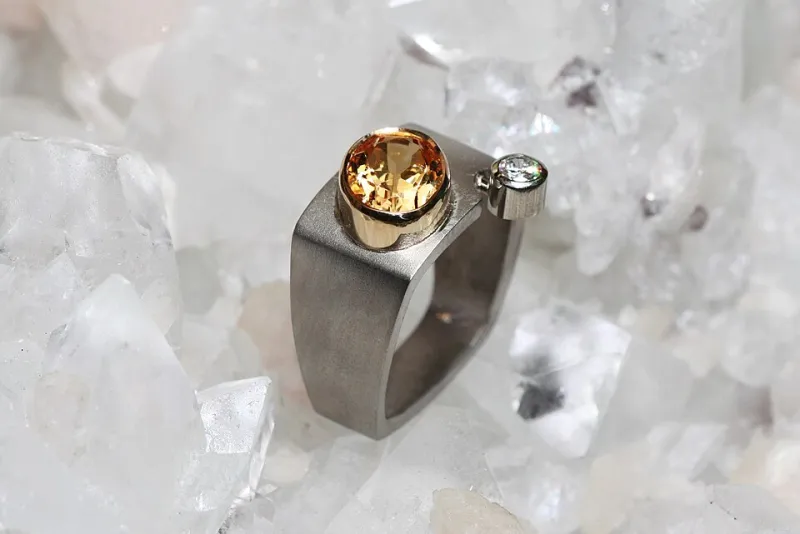
A ring can be useful, but it should be comfortable enough to wear on a long flight and robust enough for daily handling of luggage. Signet rings and low-set stones travel better than tall settings that catch on straps and pockets. A bracelet is optional; if included, choose one with a reliable clasp and avoid loose charms that can snag.
For watches, the same logic applies. One watch worn on the wrist and, at most, one alternative in a protective case is usually sufficient. A watch with modest water resistance, a sapphire crystal and a strap that can be changed for different occasions will serve better than a highly specialised piece. In 2026, travellers are also more conscious of repair networks abroad; a watch from a brand with established UK service arrangements is a practical choice.
Airport security and the quiet art of packing
Security trays are where good intentions often go astray. Loose jewellery should never be placed directly into a tray. Before joining the queue, move rings, earrings and bracelets into a small zip case, and keep that case in your hand luggage rather than in a checked bag. At UK airports such as Heathrow, Gatwick and Manchester, the familiar advice still holds: remove items calmly, place them in one receptacle and keep your eyes on the tray until it emerges.
A structured travel case with separate compartments prevents chains from tangling and stones from knocking against one another. Soft pouches are useful for earrings, but a rigid outer case is better for watches. If you are travelling with a piece of significant value, keep it in your possession rather than in checked luggage, and carry a photograph and valuation document separately from the item itself.
Customs, VAT and the paper trail
Customs declarations are rarely the most glamorous part of jewellery ownership, but they are part of travelling well. Requirements differ by country. Some destinations expect high-value personal effects to be declared on entry and matched on exit; others are less prescriptive but still ask for proof of origin if questions arise. Keep digital and paper copies of receipts, valuations and insurance schedules. For UK residents returning from abroad, personal belongings that were bought and taxed in the UK are generally not the issue; goods acquired overseas may attract VAT and duty on return. This is not legal advice, and a specialist customs broker or the relevant embassy should be consulted for complex itineraries.
A simple folder, whether physical or on a secure cloud account, should contain the purchase receipt, a recent valuation, a clear photograph of the piece and the insurer's contact details. That folder is as much a part of the travel wardrobe as the jewellery case itself.
Insurance that travels with you
Many UK home contents policies include some cover away from home, but limits for single items, unattended baggage and worldwide travel vary considerably. A piece that is adequately insured in London may not be covered in the same way during a month in Asia or a week in the United States. Before departure, check whether the item needs to be named on the policy, whether a safe is required at the destination and whether loss or theft must be reported within a specific period.
Valuations should be current. A replacement cost assessment from a reputable UK valuer is more useful than an old receipt, particularly for pieces bought several years ago. If you are travelling with inherited jewellery, ask the insurer whether documentation of provenance affects the claim process.
Climate, culture and consideration
Heat, humidity, salt water and sunscreen are not kind to every gemstone. Pearls and opals are sensitive to prolonged dryness and sudden temperature changes; emeralds can be vulnerable to knocks and should not be cleaned in ultrasonic baths without professional advice. Chlorine and salt can dull metals and damage some settings. A small cleaning cloth and a secure pouch are sensible additions to the case.
Cultural context matters too. In some countries, visible wealth attracts unwanted attention; in others, removing jewellery before entering a religious site is expected. Research local conventions before you travel, and remember that a discreet piece often serves better than a conspicuous one. The most confident traveller is not the one wearing the most, but the one who has thought about where the piece is going and how it will be received.
Wearing, protecting and returning
Finally, treat the return journey with the same care as the outward one. Clean pieces before storing them, check clasps and settings, and have watches pressure-tested if they have been exposed to salt water. A travel wardrobe works best when it is reviewed after each trip: keep what earned its place, remove what did not, and resist the urge to add more simply because a new destination has appeared on the calendar. In 2026, the passport piece is the one that comes home safely, still ready for ordinary life.