A Stone for the Story: Milestone Gemstones Beyond the Usual Birthstone in 2026
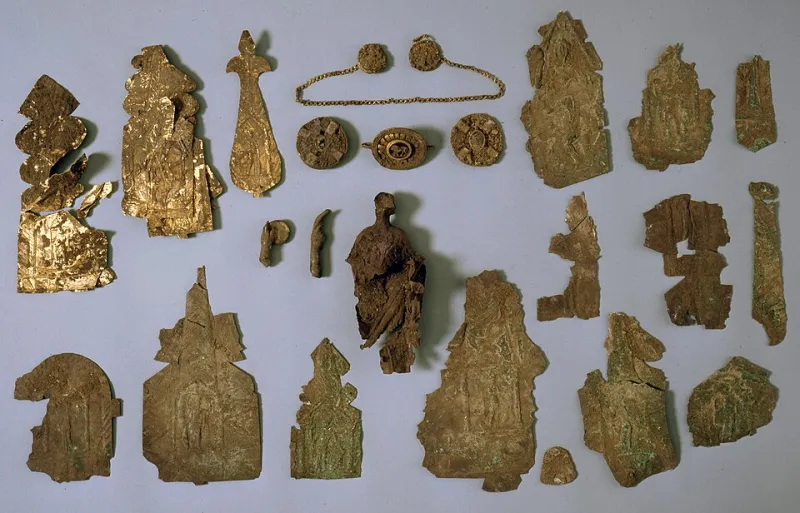
Photo: The British Museum, Ian Richardson, 2012-06-26 09:56:28, CC BY-SA 4.0, via Wikimedia Commons
A birthstone is a helpful beginning, not the whole language of gemstone gifting. In the UK, a February amethyst or a September sapphire still carries a reassuring familiarity, and anniversary lists continue to guide many purchases. Yet families are more international than ever, and a gift chosen in 2026 may need to speak across several traditions at once. The task is not to abandon convention but to understand it well enough to know when a different stone might tell a truer story.
The UK baseline: birthstones and anniversary lists
British jewellers generally work with the modern birthstone list: garnet for January, amethyst for February, aquamarine for March, diamond for April, emerald for May, pearl or moonstone for June, ruby for July, peridot or spinel for August, sapphire for September, opal or tourmaline for October, topaz or citrine for November, and turquoise, tanzanite or zircon for December. These are conventions rather than rules, and the alternatives matter for buyers who want a particular colour or a more durable stone.
Anniversary stones follow a similar pattern. Silver for 25 years, pearl for 30, ruby for 40, gold for 50 and diamond for 60 remain widely recognised in the UK. They provide a useful framing device for a gift, but they should not overrule the recipient's taste. A ruby chosen only because a list recommends it may be less welcome than a sapphire in a colour the wearer has loved for years.
When another culture writes the meaning
The international perspective is where gemstone gifting becomes more interesting. In parts of South Asia, the navaratna tradition brings nine stones together in a single design, each associated with a planetary influence and a broader cosmology. In Chinese culture, jade has long been associated with purity, protection and family continuity, and its value is often judged by texture and colour rather than by the Western four Cs alone. In parts of the Middle East, turquoise has been valued for protection and good fortune, while in Mediterranean cultures coral has carried associations with safety and vitality.
These traditions should be approached with respect rather than borrowed casually. A stone that carries deep religious or cultural meaning in one family may be simply decorative in another. For a milestone gift, it is worth asking whether the recipient has a family tradition, a regional attachment or a personal devotion that should shape the choice. The most thoughtful gift is often the one that acknowledges a heritage rather than replacing it with a generic symbol.
Symbolism without overclaiming
Gemstone symbolism is powerful precisely because it is not scientific. Sapphires are associated with wisdom and fidelity, rubies with passion and courage, emeralds with renewal, and pearls with purity and patience. These associations can give a gift a memorable narrative, but they should not be presented as guarantees of health, luck or happiness. A good jeweller will explain the tradition without turning it into a promise.
For personal milestones, the strongest symbolism is often invented rather than inherited. A stone may recall a place, a colour worn on a wedding day, a grandmother's ring or the month a child was born. In 2026, buyers are increasingly commissioning pieces that combine a birthstone with an engraved date or a hidden message. That approach allows a conventional stone to become personal without requiring an obscure gemstone with a fragile supply chain.
Durability is part of meaning
A gift that cannot be worn is a limited pleasure. Durability should be discussed early. Diamond is the hardest familiar gemstone at 10 on the Mohs scale; ruby and sapphire reach 9, which makes them suitable for rings worn daily. Emerald, at roughly 7.5 to 8, is softer and often inclusion-rich, so it needs protective setting and careful wear. Opal, pearl and tanzanite are more delicate and are better suited to pendants, earrings or occasional rings.
The setting matters as much as the stone. A low bezel setting protects edges; prongs should be checked regularly. UK hallmarking is another useful assurance: precious metal articles above the relevant weight thresholds should carry an assay office hallmark, and a reputable jeweller will explain the marks clearly. For overseas buyers, it is worth confirming whether the piece will be Hallmarked in the UK and whether any foreign hallmark affects insurance or resale.
Briefing a jeweller with confidence
A productive conversation with a jeweller begins with purpose. Is the piece for daily wear, an anniversary dinner, a christening or a retirement? That single question narrows the choice of stone, setting and metal. Next comes budget, stated plainly and including any alteration or engraving costs. Then the recipient's colour preferences, metal allergies, ring size and lifestyle. A person who works with their hands may love an opal but should probably not wear one in a ring every day.
Ask about treatment and origin. Heat treatment is common and accepted for many stones; fracture filling and dyeing require disclosure. Certification from a recognised laboratory is useful for higher-value stones, but it is not a substitute for seeing the stone in different lights. Finally, ask about care: which cleaning methods are safe, whether the stone should be removed before swimming, and what the jeweller's policy is for resizing and checking settings.
Gifting across borders
When the recipient lives overseas, the practicalities multiply. Customs duties, insurance during shipping, return policies and sizing all need to be settled before the gift is wrapped. A stone that is meaningful in the UK may need explanation in another country, and a surprise gift may be better presented as a chosen setting with the stone selected together. For international families, a piece that combines two traditions, perhaps a UK birthstone with a metal or motif from another culture, can be more eloquent than either alone.
In the end, the most successful milestone gemstone is not the rarest or the most fashionable. It is the one that can be worn with pleasure, explained with affection and cared for without anxiety. Birthstones offer a useful shorthand, but the fuller story is written by the people who receive the gift. In 2026, that story is worth taking the time to get right.