The Dominant Wrist, Considered: Fine Jewellery and Watches for Left-Handed Wearers in 2026

Left-handed shoppers in the UK are accustomed to small adjustments. Scissors, notebooks and kitchen tools are routinely reversed, often without complaint. Fine jewellery and watches, however, deserve more careful consideration. A ring, bracelet or watch is worn for years, sometimes for decades, and the difference between a piece that looks beautiful and one that feels effortless usually lies in details that are difficult to see at first glance.
At International Jewellers, we regard a purchase of this kind as a daily companion rather than an occasional ornament. For left-handed wearers, that means paying close attention to the hand that does most of the work. The aim is not to create a separate category of jewellery, nor to suggest that left-handed buyers must accept compromise. It is simply to ask better questions in the showroom and to judge comfort with the same seriousness as appearance.
Begin with the hand that does the work
The dominant hand is exposed to more wear and tear than the other. It reaches for door handles, types at a desk, carries bags, fastens seatbelts and moves through the world with greater frequency. A ring worn on the left hand may therefore meet more surfaces than its owner anticipates. A tall setting, however elegant, can catch on clothing or strike a table edge. A wide band may feel substantial in the cabinet but cumbersome during a working day.
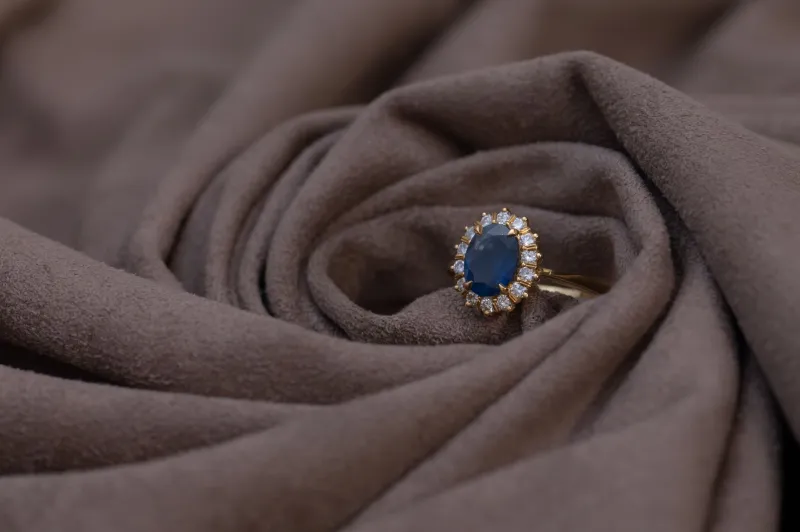
For left-handed buyers, lower-profile settings are often worth particular attention. Rub-over and bezel-set stones sit closer to the finger and present fewer edges to the world. Comfort-fit bands, which are rounded on the inside, can make a noticeable difference over long periods. It is also sensible to consider the ring’s width and weight together; a narrow band in a dense metal may feel quite different from a broader band in a lighter one.
Sizing deserves patience. The dominant hand is often marginally larger, and finger size can shift with temperature, salt intake and the ordinary rhythms of the day. A ring that fits snugly on a cold morning may feel restrictive by afternoon. Ask to be measured at the end of the day, when the hand is at its more usual size, and discuss the knuckle as well as the finger. A ring must pass comfortably over the joint without spinning loosely once in place. Resizing is sometimes possible, but it is not always straightforward, particularly with stones set around the band or with certain finishes.
The watch on the wrist you actually use
Watch design has traditionally assumed a right-handed wearer: the watch sits on the left wrist, leaving the right hand free to wind, set or operate the crown. Many left-handed people wear their watch on the right wrist instead, which can place the crown in an awkward position against the back of the hand or make it difficult to operate without removing the watch.
This is not a reason to avoid fine watches. It is a reason to try them properly. A standard crown at the three o’clock position may suit one left-handed wearer perfectly and irritate another. A crown at nine o’clock, sometimes described as a left-handed or destro configuration, can be more comfortable on the right wrist and easier to operate with the left hand. Chronograph pushers, date correctors and screw-down crowns should all be tested before purchase, not simply admired through glass.
Case thickness and bracelet design matter as much as crown position. A heavy watch may sit well on a static wrist but feel intrusive when typing or driving. A thick case can catch on a shirt cuff, while a sharply angled clasp may press against a desk. In the showroom, ask to have the bracelet fitted to the wrist you will actually use it on. Then fasten and unfasten it several times, operate every function and wear it beneath a coat sleeve. A watch should feel secure without feeling obstructive.
Bracelets, clasps and the small points of contact
Bracelets present a similar question of contact. On a dominant wrist, a clasp can become the point where a piece announces itself most loudly, often against a wrist bone or the edge of a desk. A flat, well-integrated clasp is usually kinder than a bulky one. Butterfly clasps, box clasps and lobster claws each have their virtues, but placement matters. The clasp should sit where it does not dig or rotate into an uncomfortable position.
Length is equally important. A bracelet that hangs too loosely will slide and turn; one that is too tight will leave marks and restrict movement. If the bracelet is to be worn on the dominant wrist, consider whether a safety chain is desirable and whether the clasp can be adjusted. A fine tennis bracelet, for example, may look graceful in the cabinet but reveal a tendency to flip if the fit is not precise. The same is true of chain bracelets with heavier links, which can rotate unless the clasp and weight are properly balanced.
Questions worth asking in the showroom
A good jeweller will not be offended by practical questions. Indeed, they are often the mark of a considered buyer. It is reasonable to ask whether a ring can be made in a lower setting, whether a bracelet can be adjusted to a specific wrist measurement, and whether a watch is available with an alternative crown position. It is equally reasonable to ask about resizing limits, servicing intervals and the terms of return should the piece not feel right at home.
For UK shoppers, hallmarking is another useful point of confidence. Ask to see the Assay Office marks and to have them explained. The mark is not a substitute for good design, but it is part of the assurance that a piece is what it claims to be. If a watch is being adjusted or a bracelet shortened, confirm what will happen to the removed links and whether the work affects the warranty.
Style without compromise
None of this need diminish the pleasure of choosing. A left-handed wearer is not limited to a narrow selection of practical pieces. The most successful choices are simply those in which form and function have been considered together. A lower-set ring can be every bit as beautiful as a high one. A watch with a nine o’clock crown can be a quietly distinctive object. A bracelet with a finely finished clasp can feel more luxurious precisely because it does not intrude.
In 2026, the best advice remains unhurried. Try pieces on the hand and wrist that will wear them. Move, type, fasten a cuff and open a door. Ask the questions that reveal how a piece behaves beyond the showroom. Fine jewellery and watches are chosen with care, and care includes the small design details that allow a beautiful object to become a natural part of daily life.